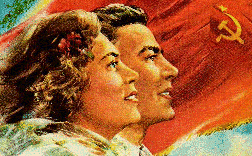

Works of Soviet Literature summarized for those unable or too lazy to read them in the original.
|
|
Works of Soviet Literature summarized for those unable or too lazy to read them in the original. |
|
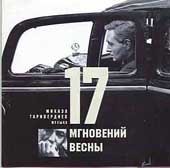
SEVENTEEN MOMENTS OF SPRING by Julian Semyonov (1968) |
|
 1. It is 12 February 1945. Standartenfuhrer von Stirlitz,
an operative in the SD, the Nazi political intelligence agency, is at a
private home on the shore of a lake which he uses for secret
rendezvous. He is waiting for an informer to arrive. He hears a nightingale sing and feels sorry for the bird, because he knows that it will freeze to death.
1. It is 12 February 1945. Standartenfuhrer von Stirlitz,
an operative in the SD, the Nazi political intelligence agency, is at a
private home on the shore of a lake which he uses for secret
rendezvous. He is waiting for an informer to arrive. He hears a nightingale sing and feels sorry for the bird, because he knows that it will freeze to death.
 Stirlitz went into Mller's empty office. He walked up to the safe and
pulled on the handle. It wouldn't open. After making sure that he was
alone, he took out his gun and blasted away. Still, the safe wouldn't
open. Next, he put a hand grenade under the safe and removed the pin.
After the smoke cleared, Stirlitz once again tried to open the safe.
Again, however, he was unsuccessful. "Hmmm..." the experienced
intelligence officer at last concluded, "must be locked."
Stirlitz went into Mller's empty office. He walked up to the safe and
pulled on the handle. It wouldn't open. After making sure that he was
alone, he took out his gun and blasted away. Still, the safe wouldn't
open. Next, he put a hand grenade under the safe and removed the pin.
After the smoke cleared, Stirlitz once again tried to open the safe.
Again, however, he was unsuccessful. "Hmmm..." the experienced
intelligence officer at last concluded, "must be locked."Stirlitziada Tell them  sent you! |
|
Drive a Horch  Or at least visit the Horch Museum Tell them sent you! |
 Walter Schellenberg Then read his Affidavit to the Nuremburg War Crimes Commission Tell them sent you! |
 Stirlitz never tried to guess how events would develop in the future. . .
. He often recalled that Pushkin, on being asked what was going to
happen to the heroine of "Evgeny Onegin" at the time when the work was coming out in installments, had replied in an irritated tone: "Ask Tatyana, I don't know."
Stirlitz never tried to guess how events would develop in the future. . .
. He often recalled that Pushkin, on being asked what was going to
happen to the heroine of "Evgeny Onegin" at the time when the work was coming out in installments, had replied in an irritated tone: "Ask Tatyana, I don't know."
|
|
Joseph Kobzon  From the soundtrack of "17 Moments of Spring" singing: Gde-To Daleko Brought to you by
|
|
Do your spying at the:  Berlin Museum of Natural History Tell them sent you! |
|
Stirlitz, you're like a werewolf. How can I believe what you say when you have so many different faces?
|
 Stirlitz went into Mller's office and said, "Herr Mller, how would you
like to work as an agent for Soviet Intelligence? The pay is good."
Mller, shocked, gives an angry rebuff, then eyes Stirlitz suspiciously.
Stirlitz starts to leave, but then stops and asks, "Gruppenfuhrer, do
you have any aspirin?" Stirlitz knew that people always remember only
the end of a conversation.
Stirlitz went into Mller's office and said, "Herr Mller, how would you
like to work as an agent for Soviet Intelligence? The pay is good."
Mller, shocked, gives an angry rebuff, then eyes Stirlitz suspiciously.
Stirlitz starts to leave, but then stops and asks, "Gruppenfuhrer, do
you have any aspirin?" Stirlitz knew that people always remember only
the end of a conversation.Stirlitziada Tell them sent you! |
|
In Europe  Otto Skorzeny SS Special Mission Commander Read about his daring Liberation of Mussolini from Gran Sasso Tell them sent you! |
 Stirlitz and Kathe are walking through the park. A gunshot rings out.
Kathe falls. Blood flows. Stirlitz, relying on his keen instincts,
immediately gets suspicious.
Stirlitz and Kathe are walking through the park. A gunshot rings out.
Kathe falls. Blood flows. Stirlitz, relying on his keen instincts,
immediately gets suspicious.
Stirlitziada Tell them sent you! |
|
Enjoy the music of:  Edith Piaf Tell them sent you! |
 A flower pot fell off the window sill of the secret apartment and
smashed Stirlitz on the head. This was the signal that his wife had
just given birth to a son. Stirlitz shed a single manly tear. He
hadn't been home for seven years.
A flower pot fell off the window sill of the secret apartment and
smashed Stirlitz on the head. This was the signal that his wife had
just given birth to a son. Stirlitz shed a single manly tear. He
hadn't been home for seven years.
Stirlitziada Tell them sent you! |
|
On May Day, Stirlitz put on his Red Army cap, grabbed a red banner and
marched up and down the corridors of the Reich Security Office singing
the Internationale and other revolutionary songs. Never before had Stirlitz been so close to failure.
Stirlitziada Tell them sent you! |
|
Roosevelt has declared on several occasions that America's goal is
Germany's unconditional surrender. However, Dulles has been talking of
compromises, even of preserving intact certain Nazi institutions.
|
"The Germans are fighting desperately against the Russians for Zemlenice, an obscure station in Czechoslovakia, which they need just as much as a dead man needs a poultice, but they surrender without any resistance such important towns in the heart of Germany as Osnabruck, Mannheim, and Kassel. You will admit that this behavior on the part of the Germans is more than strange and unaccountable."
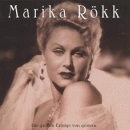 Marika Rokk |
|
In the Reich Security Office, Mller, Himmler, and Bormann are all
standing in the cafeteria line, patiently waiting their turn. Stirlitz
enters and passes everyone as he strides directly to the head of the
queue. He is served immediately. Mller, Himmler and Bormann are
baffled. What they didn't know is that a Hero of the Soviet Union has
the right to receive service without having to stand in line.
|
 Semyonov, Julian. Born 8 October 31 May 1931 in
Moscow. His father was one of the "repressed". Julian Semyonov studied
at the Oriental Institute of Moscow University, majoring in Persian History and Politics.
After graduation, he worked as a researcher and lecturer. He began
publishing fiction in 1958 and gave up the academic life to become a
journalist and writer. His 1965 novel Petrovka 35 was an immediate success.
Semyonov, Julian. Born 8 October 31 May 1931 in
Moscow. His father was one of the "repressed". Julian Semyonov studied
at the Oriental Institute of Moscow University, majoring in Persian History and Politics.
After graduation, he worked as a researcher and lecturer. He began
publishing fiction in 1958 and gave up the academic life to become a
journalist and writer. His 1965 novel Petrovka 35 was an immediate success. But Semyonov is mainly known for his "Stirlitz" series of novels. Otto von Stirlitz is the code name for Maksim Isaev, a Soviet intelligence agent who faithfully served the motherland in various posts from 1918 to 1967. He operated in Paris, Shanghai, and, most notably, in Nazi Germany during World War II where he infiltrated the SD (political security police) and practically single-handed exposed an attempt by Britain and the United States to conclude a separate peace with the Nazis and open a joint front against the Soviet Union. Stirlitz flirted with disaster in 1952 when, upon return to the Soviet Union, he was arrested by Beria's people. Only Stalin's timely death saved Stirlitz from execution. Unlike the "James Bond" type of spy thriller, the Stirlitz books are based on actual events, thoroughly researched and full of historical document and fact. Semyonov flew all over the world to research his books, even meeting with famed Nazi Otto Skorzeny. Semyonov maintained close contact and was friendly with KGB agents. There are also rumors that Semyonov himself was a KGB colonel. But his close friends deny this. The Stirlitz series appeared at a time when there was a conscious decision by the Soviet government--in light of the revealation of the Stalin-era abuses--to reabilitate the image of the intelligence worker in the eyes of the public. In this, the Stirlitz books were a hugh success. Stirlitz was an ideal Soviet intelligence worker. Modest and businesslike; cultured and well-rounded. He could speak on philosophy, history and science with equal ease. He knew most every European language, with the exception of Irish and Albanian. Hard-headed and cold-blooded, but not cruel. He preferred to use intellectual methods rather than crude violence. In his entire career he killed only once. He was a moderate drinker; his main use for a bottle of cognac was as a weapon to club opponents over the head with. And he was virtuous; when invited to partake of some prostitutes, he declined saying, "I'd rather drink some coffee." His one indulgence was his speedy and fancy Horch automobile. And through all his international adventures, Stirlitz, a true Russian at heart, was pining for his homeland. Stirlitz's status as folk hero is confirmed by the prevelance of Stirlitz jokes, which themselves constitute a whole sub-genre of Russian literature just begging for academic study. The books in the Stirlitz series are: (1) No Password Needed; (2) Diamonds for the Dictatorship of the Proletariat; (3) Tenderness; (4) Spanish Variant; (5); Alternative; (6) Third Card; (7) Major Whirlwind; (8) Seventeen Moments of Spring; (9) The Order to Survive; (10) Expansion (Parts 1 - 3); (11) Despair; and (12) Bomb for the Chairman. Even in post-Soviet society, Stirlitz is popular. Newspapers report that when the film version of Seventeen Moments of Spring is broadcast, there are noticably fewer people on the streets and the incidence of crime falls. Semyonov was a prolific writer and, besides the Stirlitz books, his major works include: Petrovka, 38; Ogoreva, 6; Confrontation; Reporter (1987); Burning; International Knot; Irreconcilability; Press Center; TASS is Authorized to Announce; Auction; Versions; Death of Stolypin; Diplomatic Agent; Dunechka and Nikita; Face to Face; Scientific Commentary; He Killed Me Near Luang-Prabang; Crossings; Pseudonym; Peter's Death; and The Secret of Kutovsky Prospect. He also produced many short stories such as: My Heart Is In The Hills; Leader; Grigorio, Friend of Ernesto; Rain in the Gutters; Still Not Autumn; Exile of the Poet; Myocardial Infarction; How This Was; Horses and People; My Guide; Night and Day; Farewell to a Beloved Woman; Skorzeny--Face to Face; Old Man in Madrid; and Old Man in Pamplona. Besides his writing, Semyonov also found time to serve as President of the International Association of Crime Writers. In 1990 Semyonov suffered a major heart attack and was clinically dead before surgeons were able to revive him. After that, however, he was severely debilitated, confinded to bed and unable to work. He died in 1993. He was married and had two daughters. |


|

|

|

|

|

|

|

|

|

|

|
||||
|
Subscribe to the SovLit.com Mailing List. Send e-mail with the word SUBSCRIBE in subject field to: sovlit-subscribe@egroups.com |