
Works of Soviet Literature summarized for those unable or too lazy to read them in the original.
|
|
Works of Soviet Literature summarized for those unable or too lazy to read them in the original. |
|
THE PLOT IN SHORT A detachment of Red Army partisans in the Far East flee from pursuing Cossacks and Japanese interventionist forces. Jealosy and lust threaten comradely relations. A true leader emerges, and the harmful effect of the Maximalist deviation is made apparant. |
 1. MOROZKA. It is July. Commander Osip Abramovich Levinson tells an orderly named Morozka
to take a packet to Shaldybin's squadron. Morozka nastily refuses. He
always has to go on such missions. Besides, he notes with some
vulgarity, he was getting ready to visit his wife at the field hospital
where she works. Levinson says if Morozka doesn't want to go, he can
turn in his rifle and go wherever he wants. Morozka reluctantly takes
the packet, gets on his horse, Mishka, and rides off.
1. MOROZKA. It is July. Commander Osip Abramovich Levinson tells an orderly named Morozka
to take a packet to Shaldybin's squadron. Morozka nastily refuses. He
always has to go on such missions. Besides, he notes with some
vulgarity, he was getting ready to visit his wife at the field hospital
where she works. Levinson says if Morozka doesn't want to go, he can
turn in his rifle and go wherever he wants. Morozka reluctantly takes
the packet, gets on his horse, Mishka, and rides off.|
See the:  Sikhote-Alin Biosphere Scanctuary Tell them  sent you! |
|
Source: Partinform (http://www.chat.ru/~partinform/rm_2.htm) |
| POOD = 16 kg or 38 pounds. |
 Japanese Intervention in the Soviet Far East Tell them sent you! |
 Have we proved to be worthy partisans? Today, no. We were running
around like undisciplined little girls! And if the Japanese had really
been attacking? They would have choked us like chickens! Shame!
Have we proved to be worthy partisans? Today, no. We were running
around like undisciplined little girls! And if the Japanese had really
been attacking? They would have choked us like chickens! Shame!
|
|
Mechik felt the wild joy of deliverance. The Japanese soldier he shot
was contorting in the hot dust, suffering his final death agonies.
|
 Kolchak And The Russian Civil War Tell them sent you! |
|
As long as millions of people in our country still exist in povery and
filth, as long as they still plow with primitive wooden plows and
believe in a cruel, stupid God, then such weak-willed, lazy people, such
useless good-for-nothings, will go on being born in it.
|
|
However, he soon got used to the situation and reached the point where fear for his own life stopped hindering his ordering around the lives of others. And in this second period he found the ability to direct events. He was most successful in this when he was able to clearly and correctly feel out the real direction of events and the relationship of forces and people in them." |
|
And they walked drunkenly along the street, joking, stumbling, scaring
the dogs, cursing to the highest heavens themselves, their family and
friends, and this uncertain, harsh world.
|
|
The dejected, subdued mass of men, who only moments before were throwing
up their hands in despair and crying, were transformed into superhuman,
rapid, obedient, and feverish activity....Tearing off their coats, they
worked; and through their torn pants and shirts flashed their
straining, sweating bodies, scratched and bleeding. They lost all sense
of time, space, their own bodies, shame, pain and fatigue. With their
caps they scooped up swamp water, stinking of frog eggs, and greedily
gulped it down, like wounded animals.
|
THE END
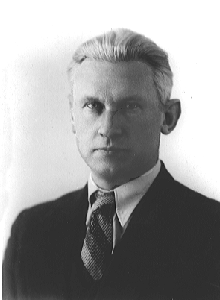 Fadeev, Alexander Alexandrovich. Born, 1901 in
Krimy on Volga, east of Tver. Father was a village teacher, his
mother was a doctor's assistant. Family moved to Vilnius, Ufa,
then to the Far East region of Ussuri in 1908. He went to the
village school in Sarovka, near Iman close to the Manchurian
border. In 1912 the family moved to Chuguevka, further south in
the same region. In autumn of 1912 he entered the Commercial
Academy in Vladivostok. In 1918, during the Japanese occupation of
the region, he joined the Communist Party and became active in the
Bolshevik underground. In the spring of 1919, he left the academy
without taking his final exams and joined the partisans east of
Vladivostok. He saw action at Khabarovsk and Spassk and was
wounded. He then joined the Red Army. In spring 1921, he went to
Moscow as a delegate to the 10th All-Russian Party Congress.
Later, he took part in the suppression of the Kronstadt rebellion
and was again wounded. He was demobilized and entered the Academy
of Mines in Moscow. But in 1924 he left the Academy and went south
to Kradnodar and Rostov-on-Don for Party and journalistic work,
mainly for the Rostov paper Soviet South. He also helped
establish the literary journal Lava. In 1926 he returned to
Moscow and continued his political work for the Writers'
Association. In 1937 he visited Spain during the Civil War. During
the Great Patriotic War (World War II), he wrote reports and
sketches from the front for Pravda and Izvestiya. At
the end of the war he resumed political activities, visiting
Britain in 1947, Iceland and Poland in 1949, and Czechoslovakia and
Austria in 1951. He won two Orders of Lenin, was one of the
leaders of RAPP (Russian Association of Proletarian Writers), and
served on the editorial boards of several literary journals. In
1934 he was elected to the Presidium of the Union of Soviet
Writers, and was General Secretary of the organization from 1946 to
1954. In 1939 he became a member of the Party's Central Committee.
Fadeev, Alexander Alexandrovich. Born, 1901 in
Krimy on Volga, east of Tver. Father was a village teacher, his
mother was a doctor's assistant. Family moved to Vilnius, Ufa,
then to the Far East region of Ussuri in 1908. He went to the
village school in Sarovka, near Iman close to the Manchurian
border. In 1912 the family moved to Chuguevka, further south in
the same region. In autumn of 1912 he entered the Commercial
Academy in Vladivostok. In 1918, during the Japanese occupation of
the region, he joined the Communist Party and became active in the
Bolshevik underground. In the spring of 1919, he left the academy
without taking his final exams and joined the partisans east of
Vladivostok. He saw action at Khabarovsk and Spassk and was
wounded. He then joined the Red Army. In spring 1921, he went to
Moscow as a delegate to the 10th All-Russian Party Congress.
Later, he took part in the suppression of the Kronstadt rebellion
and was again wounded. He was demobilized and entered the Academy
of Mines in Moscow. But in 1924 he left the Academy and went south
to Kradnodar and Rostov-on-Don for Party and journalistic work,
mainly for the Rostov paper Soviet South. He also helped
establish the literary journal Lava. In 1926 he returned to
Moscow and continued his political work for the Writers'
Association. In 1937 he visited Spain during the Civil War. During
the Great Patriotic War (World War II), he wrote reports and
sketches from the front for Pravda and Izvestiya. At
the end of the war he resumed political activities, visiting
Britain in 1947, Iceland and Poland in 1949, and Czechoslovakia and
Austria in 1951. He won two Orders of Lenin, was one of the
leaders of RAPP (Russian Association of Proletarian Writers), and
served on the editorial boards of several literary journals. In
1934 he was elected to the Presidium of the Union of Soviet
Writers, and was General Secretary of the organization from 1946 to
1954. In 1939 he became a member of the Party's Central Committee.His first published work, Against the Current appeared in Molodaya Gvardiya in 1923. In 1934 this piece was revised and renamed The Birth of the Amgunsky Regiment. It is a story of partisans and Red Army troops in the Far East in 1920. The Flood (1924) is set in the taiga between the February and October Revolutions of 1917. The Rout (1927) is based on the author's own experiences with partisans in 1919 when they were forced to retreat deep into the taiga. He authored a manifesto piece, The Highway of Proletarian Literature in 1928. Parts of his second novel, The Last of the Udege, an attempt at a broad treatment of the Civil War in the Far East, appeared between 1929 and 1940, but it was never completed. The tale Earthquake appeared in 1939 and his war sketches, Leningrad During the Siege came out in 1944. His third novel, The Young Guard (1945) was based on the heroic exploits of young Communist underground workers in the Donbass town of Krasnodon during the Nazi occupation. Another novel, Black Mettallurgy, intended to show the triumphs of socialist labor, also never reached completion. In his last years he suffered from kidney disorder, neuritis, alcoholism, and depression. During a period of sobriety in May 1956, he committed suicide. His bitter suicide note, clearly revealing his disallusionment with the Party and Stalin, was "arrested" by the KGB at the time of his death and was not released until 34 years later, in the era of perestroika and glasnost. In the note, he wrote: It is impossible for me to live any further since the art to which I have given my life has been destroyed by the self-confident, ignorant leadership of the Party and can no longer be corrected. The best cadres of literature--in number far more than the tsarist satraps could even dream--have been physically exterminated or have died with the criminal connivance of those in power.References: Charon's Chronicles--Fadeev Luker, Nicholas. "From Furmanov to Sholokhov", Ardis 1988. |


|

|

|

|

|

|

|

|

|

|

|
||||
|
Subscribe to the SovLit.com Mailing List. Send e-mail with the word SUBSCRIBE in subject field to: sovlit-subscribe@egroups.com |