

Works of Soviet Literature summarized for those unable or too lazy to read them in the original.
|
|
Works of Soviet Literature summarized for those unable or too lazy to read them in the original. |
|
THE PLOT IN SHORT Gleb Chumalov, a demobilized Red Army soldier, returns to his home town after the civil war. The cement factory where he used to work is a crumbling mess. His wife, Dasha, is a Communist Party worker and too busy for him. Their daughter, Nurka is living in a children's home, and eventually dies. Gleb goes to the District Party Committee headquarters and tries to get them to restart the factory right away. They tell him he's a dreamer. The leader of the party's women's section Polya Mekhova, is attracted to Gleb, but he rebuffs her. He loves Dasha. Gleb takes command of the factory party committee and starts whipping it into shape for an eventual restart. He learns that in his absence Dasha was somehow involved with Engineer Kleist, a bourgeoise engineer from the pre-revolution days, who was responsible for handing Gleb over to the Whites for torture. (He eventually escaped the Whites and joined the Red Army.) Gleb ponders killing Kleist. Dasha and head of the local Soviet Executive Council Badin ride out to a nearby village where the people are resisting forced grain requisitions. During the ride, Badin tries to force himself on Dasha, who rebuffs him. Dasha is captured by Cossacks and threatened with death, but they let her go. Badin excuses the peasants from grain requisitions, and Dasha agrees to sleep with him. Dasha finally tells Gleb of what happened during his absence. After Gleb had fled to join the Reds, Dasha was seized by the Whites, interrogated, then let go. Dasha then began to work for the Red partisans, delivering messages, getting them supplies, etc. Dasha is again arrested and raped. She would have been killed but Kleist, feeling guilty for what he did to Gleb, intercedes. Communists go through the town, expropriating the property of the ex-bourgeoise and relocating them out to the villages. One Communist, Sergei, is troubled by this action, particularly because his father is one of those to be shipped out. His father, however, is happy to go. The Cossacks attack the factory. Gleb and others fight back. They arrest and execute a leader of the Cossacks, Dmitri, the brother of Sergei. As the New Economic Policy (NEP) takes root, traders return to town; shops and cafes open up. Mekhova is opposed to the NEP, considering it a capitulation. Badin, Shramm, and others abuse the privileges of their office, getting extra food and vodka supplies for themselves and having parties. Badin rapes Mekhova. Shramm tries to stop the restart of the factory, but Gleb denounces it as sabotage gets authorization from the Bureau of Industry to continue. A Party commission shows up and purges many members from the factory committee, including Mekhova, who opposed the New Economic Policy, and Sergei, who is a former Menshevik. The commission, however, is gushing in its approval of Dasha. Badin receives a promotion. Work to restart the factory continues at a feverish pace. Mekhova is sent away for rest. Dasha takes over leadership of the women's section. She leaves Gleb, not for another man, but for her work. Shramm is arrested. The factory finally reopens, and thousands cheer Gleb. |
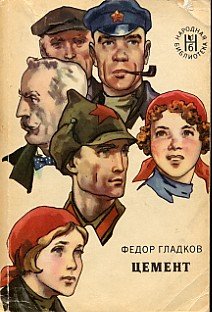 CHAPTER I: THE DESERTED FACTORY
| "There are enemies everywhere you look." |
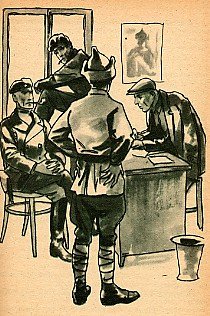 2. A Concrete Proposal. Gleb enters the District Committee office.
The Secretary, Zhidky, is talking with Chibis (head of the local
Cheka) and Lukhara (chairman of the local trade union council). They
are discussing the need to establish a reliable method of supplying wood for
fuel. Zhidky says that Gleb has been appointed secretary of his factory
group, which currently is totally disorganized, full of speculators and
profiteers. Gleb says that to establish strong organization, they should
make a firm announcement that the factory will be reopened. Chibis snorts
contemptuously. Lukhara says Gleb lacks understanding of the facts. Zhidky
angrily tells Gleb that the factory must wait until the firewood problem is
dealt with and challenges him to come up with a solution. Gleb thinks a
moment then devises one: extend the gravity railroad, or ropeway, up to the
mountain pass, using voluntary Sunday work. Lukhava supports the idea.
Zhidky tells Gleb that worrying about the factory is utopianism. The factory
is a thing of the past and of the future, not the present. Gleb is angered
by this, and says the workers need concrete goals in order to be made into
class-conscious proletarians. Zhidky calms down and agrees that the main
problem is the inspiration and organization of the masses. The meeting ends
and Lukava proposes that he and Gleb work together on the plan. Lukhava says
he's heard about him from Dasha. Gleb wonders if Lukhava is Dasha's
lover.
2. A Concrete Proposal. Gleb enters the District Committee office.
The Secretary, Zhidky, is talking with Chibis (head of the local
Cheka) and Lukhara (chairman of the local trade union council). They
are discussing the need to establish a reliable method of supplying wood for
fuel. Zhidky says that Gleb has been appointed secretary of his factory
group, which currently is totally disorganized, full of speculators and
profiteers. Gleb says that to establish strong organization, they should
make a firm announcement that the factory will be reopened. Chibis snorts
contemptuously. Lukhara says Gleb lacks understanding of the facts. Zhidky
angrily tells Gleb that the factory must wait until the firewood problem is
dealt with and challenges him to come up with a solution. Gleb thinks a
moment then devises one: extend the gravity railroad, or ropeway, up to the
mountain pass, using voluntary Sunday work. Lukhava supports the idea.
Zhidky tells Gleb that worrying about the factory is utopianism. The factory
is a thing of the past and of the future, not the present. Gleb is angered
by this, and says the workers need concrete goals in order to be made into
class-conscious proletarians. Zhidky calms down and agrees that the main
problem is the inspiration and organization of the masses. The meeting ends
and Lukava proposes that he and Gleb work together on the plan. Lukhava says
he's heard about him from Dasha. Gleb wonders if Lukhava is Dasha's
lover.| "We are cement, comrades; the working class!" |
|
Find out who is: August Bebel Tell them  sent you! |
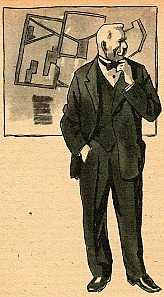 CHAPTER V: THE UNDERGROUND EMIGRANT
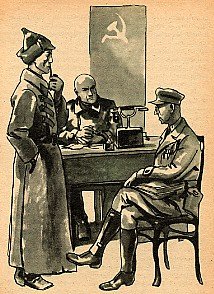 The Chairman of the Council of People's Economy Shramm enters. When
asked about the possibility of restarting the factory, Shramm does not
answer, but gives a long-winded speech about the inventories being conducted
by the Economic Council. He says the most important work of the Council is
to conserve the patrimony of the State without tolerating any doubtful
undertakings. When asked about wood supplies, Shramm says he has the plan of
how much wood is to be felled, but the problem of delivery of wood to the
districts is not the Council's affair. Badin tells Shramm that they must
start the dynamos at the factory and get the ropeway going for wood
deliveries. Shramm says that only the Bureau of Industry can sanction such
a plan. He suggests that any plans for the factory should undergo several
studies and that he himself would oppose such schemes. Badin angrily orders
that he will not oppose the plan and that Shramm in fact will present a
report on it at the next Economic Council meeting. When asked if he knows
that the people's property, which he works so hard to protect, is being
openly plundered, Shramm says, "This is unknown to me." Gleb promises Badin
that, while the work will be hard, he and his comrades will get the project
done. Shramm asserts, "We must cure our comrades of their leaning to all
kinds of adventure." Gleb laughs and leaves.
The Chairman of the Council of People's Economy Shramm enters. When
asked about the possibility of restarting the factory, Shramm does not
answer, but gives a long-winded speech about the inventories being conducted
by the Economic Council. He says the most important work of the Council is
to conserve the patrimony of the State without tolerating any doubtful
undertakings. When asked about wood supplies, Shramm says he has the plan of
how much wood is to be felled, but the problem of delivery of wood to the
districts is not the Council's affair. Badin tells Shramm that they must
start the dynamos at the factory and get the ropeway going for wood
deliveries. Shramm says that only the Bureau of Industry can sanction such
a plan. He suggests that any plans for the factory should undergo several
studies and that he himself would oppose such schemes. Badin angrily orders
that he will not oppose the plan and that Shramm in fact will present a
report on it at the next Economic Council meeting. When asked if he knows
that the people's property, which he works so hard to protect, is being
openly plundered, Shramm says, "This is unknown to me." Gleb promises Badin
that, while the work will be hard, he and his comrades will get the project
done. Shramm asserts, "We must cure our comrades of their leaning to all
kinds of adventure." Gleb laughs and leaves.| "Struggle with all your might, organize labor, decide vital questions. Then Lenin will be before you in his full aspect." |
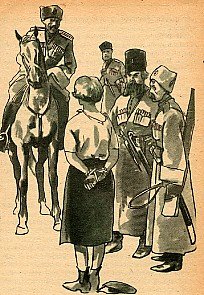 As they start riding out of town, they pass Zhuk. Badin tells Dasha that
Zhuk is a good-for-nothing disrupter. Dasha, however, defends him as a good
turner and conscientious Communist. Once out of town, Badin lunges at Dasha
and kisses her. She struggles against him. Suddenly, they are attacked by
Cossacks, who kill their driver. Badin takes the reins and urges the horses
on. Dasha leaps out of the carriage and knocks down a pursuing Cossack. As
Badin gallops to safety, the Cossacks beat Dasha. Dasha is then brought to
their Colonel who admires her bravery but hates all communists and plans to
execute her, even though she is a woman. He orders her to be hanged. They
drag her to a tree and put a rope around her neck, but Dasha does not flinch,
does not beg. Finally, the Colonel relents and orders her released.
As they start riding out of town, they pass Zhuk. Badin tells Dasha that
Zhuk is a good-for-nothing disrupter. Dasha, however, defends him as a good
turner and conscientious Communist. Once out of town, Badin lunges at Dasha
and kisses her. She struggles against him. Suddenly, they are attacked by
Cossacks, who kill their driver. Badin takes the reins and urges the horses
on. Dasha leaps out of the carriage and knocks down a pursuing Cossack. As
Badin gallops to safety, the Cossacks beat Dasha. Dasha is then brought to
their Colonel who admires her bravery but hates all communists and plans to
execute her, even though she is a woman. He orders her to be hanged. They
drag her to a tree and put a rope around her neck, but Dasha does not flinch,
does not beg. Finally, the Colonel relents and orders her released.|
So Similar, It's Scary ! Read a Comparison: Socialist Realism and the American Cowboy Novel Tell them sent you! |
|
ORDER OF THE RED BANNER (Gleb's Medal)  Instituted on 16 Sept 1918. Awarded to military personnel for: Outstanding combat leadership of military units desplaying special bravery and courage; and for being victorious over the enemy despite heavy losses or unfortunate circumstances, or for inflicting heavy casualties on the enemy. Made of solid silver with gold plating and red and white enamel. Current value on the open market: $20-$40 |
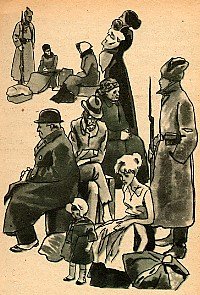 3. The Grazing Grounds. In the day, the communists start
herding the rich bourgeoisie down the street toward the edge of town. Sergei
was troubled. He could not believe that the Party would approve of this, the
sobbing women and children. Ivan Arsenich, barefoot, walked at the front of
the crowd. Sergei is sickened to see his haggard condition--Ivan Arsenich
had aged greatly since the death of Sergei's mother. Sergei urges his father
to stay and live with Sergei in his room. Ivan Arsenich refuses.
Verochka, Ivan Arsenich's young librarian, takes Ivan Arsenich by the
arm and joins him on his march out of town.
3. The Grazing Grounds. In the day, the communists start
herding the rich bourgeoisie down the street toward the edge of town. Sergei
was troubled. He could not believe that the Party would approve of this, the
sobbing women and children. Ivan Arsenich, barefoot, walked at the front of
the crowd. Sergei is sickened to see his haggard condition--Ivan Arsenich
had aged greatly since the death of Sergei's mother. Sergei urges his father
to stay and live with Sergei in his room. Ivan Arsenich refuses.
Verochka, Ivan Arsenich's young librarian, takes Ivan Arsenich by the
arm and joins him on his march out of town.|
Find out what bourgeois intellectuals say about Lenin's: NEP Tell them sent you! |
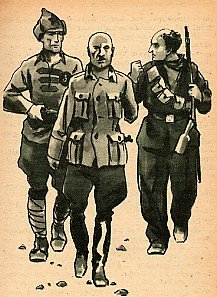 2. Prisoner with the Empty Sleeve. Gleb and Sergei stalk an enemy
soldier in the bushes and capture him. It is Sergei's brother, Dimitri.
Dimitri is haughty and taunts Sergei, calling him foolish and prone to
feminine hysteria and a pitiable slave to his Party. He says he would have
been glad to hang Sergei publicly. Sergei says he's glad he had a hand in
capturing Dimitri and leading him to his death. Dimitri invites Sergei to
take part in the execution.
2. Prisoner with the Empty Sleeve. Gleb and Sergei stalk an enemy
soldier in the bushes and capture him. It is Sergei's brother, Dimitri.
Dimitri is haughty and taunts Sergei, calling him foolish and prone to
feminine hysteria and a pitiable slave to his Party. He says he would have
been glad to hang Sergei publicly. Sergei says he's glad he had a hand in
capturing Dimitri and leading him to his death. Dimitri invites Sergei to
take part in the execution.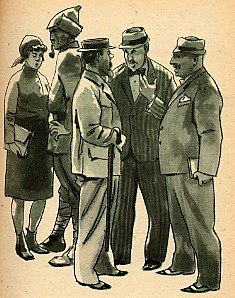 3. Alarm. Walking through the town, Gleb sees the shop windows
announcing the imminent openings of cafes, trading companies, etc., and he is
vaguely troubled as he ponders the New Economic Policy. He sees Mekhova
staring in the window of a cafe, where violin music is being played. Gleb
stands behind Mekhova. He hears the lawyer Chirsky passing, talking of a
stabilized currency, freightage charges, net profits, feluccas. Mekhova
tells Gleb she is troubled by the changes and that she doesn't understand it.
Gleb is also alarmed at the idea of giving the factory as a
concession.
3. Alarm. Walking through the town, Gleb sees the shop windows
announcing the imminent openings of cafes, trading companies, etc., and he is
vaguely troubled as he ponders the New Economic Policy. He sees Mekhova
staring in the window of a cafe, where violin music is being played. Gleb
stands behind Mekhova. He hears the lawyer Chirsky passing, talking of a
stabilized currency, freightage charges, net profits, feluccas. Mekhova
tells Gleb she is troubled by the changes and that she doesn't understand it.
Gleb is also alarmed at the idea of giving the factory as a
concession.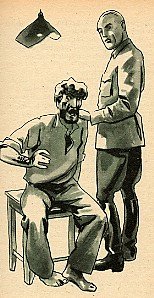 Zhidky pulls Tskheladze into his room. The Georgian says what Badin and the
others are doing is a shameful scandal and it is ruining the Party. Zhidky
paces, pondering. He says they are in for a dreadful trial, worse than civil
war, ruin and famine. The petty trader is crawling out of his hole, trying
to insinuate himself into Party ranks. The foe is cunning, and a new
strategy must be developed, Zhidky says. It will be a long siege. The
romance of the tumultuous battle fronts is over. Tskheladze doesn't
understand Zhidky. He only bewails the plight of the workers and
leaves.
Zhidky pulls Tskheladze into his room. The Georgian says what Badin and the
others are doing is a shameful scandal and it is ruining the Party. Zhidky
paces, pondering. He says they are in for a dreadful trial, worse than civil
war, ruin and famine. The petty trader is crawling out of his hole, trying
to insinuate himself into Party ranks. The foe is cunning, and a new
strategy must be developed, Zhidky says. It will be a long siege. The
romance of the tumultuous battle fronts is over. Tskheladze doesn't
understand Zhidky. He only bewails the plight of the workers and
leaves.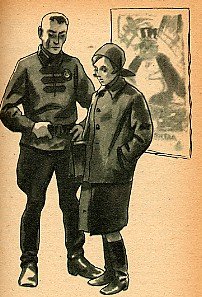 Gleb storms out and meets a group of workers. He promises them that work
will resume tomorrow. Gleb barges into Badin's office. Dasha is also there.
Badin is in the process of criticizing Shramm and his Economic Council for
not seeing or doing anything about the robbery in the Forestry Department.
Further, the Council used false figures to argue for leasing a tannery to its
former owner. Gleb denounces as sabotage and counterrevolution the stoppage
of work at the factory and demands to know which criminal is responsible for
it. He produces documents from the Bureau of Industry saying that the
renovation of the factory must be carried out immediately and that supplies
will be provided. Shramm turns deathly pale.
Gleb storms out and meets a group of workers. He promises them that work
will resume tomorrow. Gleb barges into Badin's office. Dasha is also there.
Badin is in the process of criticizing Shramm and his Economic Council for
not seeing or doing anything about the robbery in the Forestry Department.
Further, the Council used false figures to argue for leasing a tannery to its
former owner. Gleb denounces as sabotage and counterrevolution the stoppage
of work at the factory and demands to know which criminal is responsible for
it. He produces documents from the Bureau of Industry saying that the
renovation of the factory must be carried out immediately and that supplies
will be provided. Shramm turns deathly pale.|
Read Lenin's: Materialism and Empirio-Criticism Tell them sent you! |
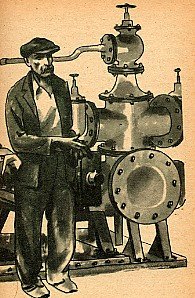 CHAPTER XVII: THRUST INTO THE FUTURE
 Back in present time, Gleb is introduced to the crowd, who cheer him with
wild, unrestrained enthusiasm, shaking the mountains and the tower on which
he is standing. Gleb speaks, saying the whole world will soon know of their
victory: "We've staked our blood on it, and with our blood we'll set fire to
the whole world. And now, tempered in fire, we're staking everything on our
labor. Our brains and our hands tremble--not from strain but from the desire
for new labors. We are building up socialism, comrades, and our proletarian
culture. On to victory, comrades!"
Back in present time, Gleb is introduced to the crowd, who cheer him with
wild, unrestrained enthusiasm, shaking the mountains and the tower on which
he is standing. Gleb speaks, saying the whole world will soon know of their
victory: "We've staked our blood on it, and with our blood we'll set fire to
the whole world. And now, tempered in fire, we're staking everything on our
labor. Our brains and our hands tremble--not from strain but from the desire
for new labors. We are building up socialism, comrades, and our proletarian
culture. On to victory, comrades!"|
Gladkov, Fyodor Vasilyevich. Born 9 June (Old Style--21 June New Style) 1883 into poor family of Old Believers in the village of Chernavka, Saratov Province. In 1895, family moves to Ekaterinodar (later, Krasnodar) in the Kuban. . . . (...Continued...) |


|

|

|

|

|

|
||||
|
Subscribe to the SovLit.com Mailing List. Send e-mail with the word SUBSCRIBE in subject field to: sovlit-subscribe@egroups.com |